Business
White Granite vs. Quartz: Which Looks Better in a Modern Kitchen?
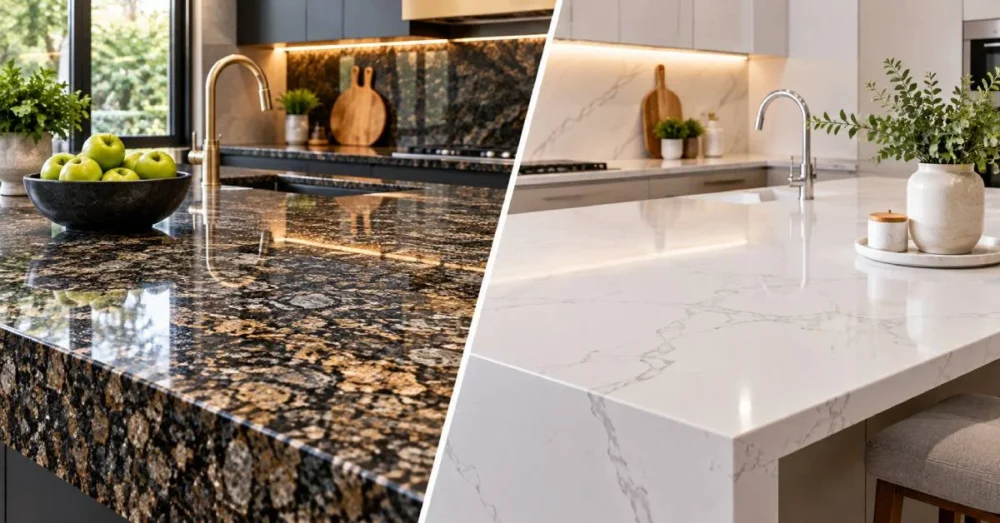
White countertops are still one of the most popular choices for modern kitchens. They make a room feel bright, clean, and open. But once you decide on white, you face a harder question. Should you pick natural granite or engineered quartz? Both can look great. Both last for years. And both come in a wide range of white and off-white shades. The difference is in the details. Granite is cut from natural stone, so every slab has its own pattern. Quartz is made in a factory, so the color and veining are more even and easier to predict. That changes how each one fits a modern design.
In this article, I’ll compare the look, feel, upkeep, cost, and durability of white granite and quartz. I’ll also cover current design trends, common mistakes, and how to choose the right one for your space and the way you actually use your kitchen.
Table of Contents
What “Modern” Means in Kitchen Design Today
Before comparing materials, it helps to know what a modern kitchen looks like right now.
Modern kitchens focus on clean lines and simple shapes. Cabinets are often flat-panel with little or no hardware. Colors are calm. Clutter is kept out of sight.
But the trend has shifted in the last few years. The stark, all-white kitchen is less common. Many homeowners now want warmer whites, wood tones, matte finishes, and some natural texture. So “modern” today doesn’t mean cold. It means simple, but still lived in.
That matters when picking a countertop. The right surface should fit that clean look without feeling flat or sterile.
How White Granite Looks Up Close
Granite is a natural stone. It forms deep in the earth from cooling magma. That process gives it a speckled, grainy look with flecks of different minerals.
White granite is rarely pure white. Most slabs have gray, black, beige, or even burgundy specks mixed in. Some popular options include:
- Alaska White: white and gray base with dark flecks
- Colonial White: soft white with gray and light burgundy specks
- River White: white with gray veining and small garnet spots
- White Ice: bright white with bold gray and black streaks
- Kashmir White: creamy white with small dark red garnet specks
The main thing to know is this: no two granite slabs are the same. Even two slabs from the same quarry can look different. That’s part of the appeal. Your countertop will be one of a kind.
In a modern kitchen, granite adds texture and depth. It works well when you want a natural element to balance flat cabinets and simple hardware. But a busy pattern can fight with a minimal design. If you want granite in a modern space, pick a slab with soft movement and fewer high-contrast specks.
How White Quartz Looks Up Close
Quartz countertops are engineered. They’re made from about 90 percent ground natural quartz mixed with resins and pigments. The mix is pressed into slabs.
Because it’s made in a controlled way, quartz can look almost any way the maker wants. White quartz comes in a few main styles:
- Solid white: clean, even color with no pattern
- Fine speckle: small, uniform flecks for subtle texture
- Marble-look: white base with gray or gold veins, like Calacatta or Carrara marble
- Concrete-look: soft gray-white with a matte, industrial feel
Quartz is very consistent. The sample you see in the showroom will closely match your slab. And if you need more than one slab, they’ll look nearly the same.
That makes quartz a natural fit for modern kitchens. A solid white or soft-veined quartz gives you that clean, seamless look many modern designs aim for. Marble-look quartz is one of the most requested options right now because it gives the style of marble without most of the upkeep.
Side-by-Side: Which Looks Better?
There’s no single right answer. It depends on the look you want.
Pick white granite if you want:
- A natural, one-of-a-kind surface
- More depth and texture
- A warmer, earthy feel
- A kitchen that mixes modern and traditional
Pick white quartz if you want:
- A clean, even, minimal look
- A predictable match between samples and slabs
- Marble-style veining without real marble
- Seamless runs on islands and waterfall edges
For a strict, minimal modern kitchen, quartz usually wins on looks. Its even color lets the cabinets, lighting, and layout stand out. For a warm modern kitchen with wood, stone, and texture, granite can look better because it adds natural character.
Durability and Daily Use
Looks matter. But a countertop also has to handle cooking, spills, and daily wear.
Heat. Granite handles heat well. You can set a warm pan on it for a moment without much risk, though trivets are still smart. Quartz is weaker here. The resin can burn, discolor, or crack from high heat. Most makers warn against direct contact with hot pots and pans.
Scratches. Both are hard and resist scratches. Quartz is slightly more even in hardness because of how it’s made. Granite can sometimes have softer spots or small natural pits.
Stains. Quartz is non-porous, so it doesn’t absorb liquids. Wine, coffee, and oil usually wipe right off. Granite is porous to some degree. Lighter granites can absorb oil or wine and stain if they’re not sealed. That’s a real concern with white stone because stains show more.
Chips. Both can chip at the edges if hit hard. Granite chips can often be repaired with epoxy. Quartz chips can also be fixed, but color matching is sometimes harder.
Sunlight. Quartz can yellow or fade over time in strong, direct UV light. That’s why it isn’t recommended outdoors. Granite holds up fine in sunlight.
Maintenance: What You’ll Actually Do
Here’s the honest version of upkeep for each.
White granite:
- Seal it about once a year, or as the installer suggests
- Wipe up spills quickly, especially oil and wine
- Clean with mild soap and water or a stone-safe cleaner
- Avoid vinegar, bleach, and harsh acids
A quick test helps. Drip a little water on the surface. If it darkens the stone within a few minutes, it’s time to reseal.
White quartz:
- No sealing needed
- Clean with mild soap and water
- Avoid harsh chemicals, abrasive pads, and high heat
- Use trivets and cutting boards
Quartz is easier day to day. If you don’t want to think about sealing, it’s the simpler choice.
Cost: What to Expect
Prices change by region, slab, edge style, and installer. But in general, both materials fall in a similar range.
Entry-level white granite can be cheaper than mid-range quartz. Rare or exotic white granites can cost much more. Quartz pricing depends mostly on the brand and design. Marble-look quartz with bold, realistic veining usually costs more than plain white.
Other things affect the final price:
- Slab thickness (2 cm vs. 3 cm)
- Edge profiles, like mitered or waterfall edges
- Number of cutouts for sinks and cooktops
- Backsplash height
- Removal of old countertops
Get a written quote that includes fabrication, installation, and any extras. Two quotes that look different may cover very different work.
Current Trends Worth Knowing
Some design trends are shaping how people use white countertops right now.
Honed and matte finishes. Polished stone is still common. But matte and honed finishes are growing fast in modern kitchens. They feel softer and hide fingerprints better. Keep in mind that honed granite may need sealing more often.
Waterfall islands. The countertop runs down the sides of the island to the floor. Quartz is popular here because the pattern stays consistent across the joint.
Full-height backsplashes. Some homeowners run the same slab up the wall behind the stove or sink. This gives a clean, continuous look.
Warm whites. Creamy and off-white tones are replacing bright, cool whites. Both granite and quartz offer warmer options.
Thicker edges. Mitered edges make a countertop look thicker and more solid. This works well with both materials.
There’s also a safety issue worth knowing about. Cutting engineered quartz creates fine silica dust, which can cause serious lung disease in fabrication workers. Some places, like Australia, have banned engineered stone, and U.S. regulators have tightened rules. This doesn’t affect homeowners using finished countertops. But some brands now offer low-silica options, and many people ask installers about their dust controls before hiring.
Matching the Countertop to Your Local Installer
Where you buy matters as much as what you buy. A good local fabricator will let you see full slabs, not just small samples. That’s very important for granite, since the slab you pick is the slab you get.
If you’re shopping for granite countertops Cookeville, ask to visit the stone yard and tag your exact slab. Look at it in natural light if you can. And if you’re comparing quartz countertops crossville, bring a cabinet door or paint chip so you can see how the white tone works with your other colors.
Also ask about templating, seam placement, and how long installation takes. A clean seam in the right spot can make a big difference in how modern the finished kitchen looks.
Common Mistakes to Avoid
- Picking from a small sample. Granite can look very different on a full slab.
- Ignoring undertones. A cool white counter next to warm white cabinets can look off.
- Choosing a busy pattern for a minimal kitchen. Too much movement can clash.
- Skipping sealing on granite. Light stone shows stains quickly.
- Using quartz like granite. Hot pans can damage it.
- Forgetting lighting. Under-cabinet lights can change how a white surface looks.
So, Which One Should You Choose?
If you want a clean, consistent, low-maintenance surface for a minimal modern kitchen, white quartz is usually the better fit. If you want natural texture, heat resistance, and a slab no one else has, white granite is a strong choice.
Neither one is wrong. Think about how you cook, how much upkeep you’ll actually do, and what style you want the room to have. Then look at full slabs in person before you decide. That step alone will save you from most regrets.



-

 Business5 years ago
How to Do Long-Distance Moves with Children
-
 Business3 years ago
The Ultimate Guide To Thriving In Your Printing Franchise
-
Business3 years ago
Exploring The Benefits And Challenges Of Restaurant Franchising
-

 Tech5 years ago
Cyber Table That Will Change Your Life
-

 Biography4 years ago
Melody Marks- Personal Life, Education, Career, And Much More
-
Lifestyle3 years ago
Dallas’ Hidden Gems: 6 Must-Try Restaurants Off The Beaten Path!
-

 Business6 years ago
Is Guest Posting a Good Inbound Marketing Strategy?
-
Lifestyle3 years ago
Top 10 Restaurant Franchises In The US






Recent Comments